
From Sports to STEAM: Why Balanced Activities Matter for Kids’ Development
Updated: Mar 27
Children today often grow up in a world that pushes them toward extremes, whether they are fully immersed in sports, deeply absorbed in screens, or narrowly focused on academic performance. The real solution lies in balanced activities that develop both the body and the mind, fostering a more holistic growth path. This approach celebrates the child who runs on the football field and builds a robot, or who swims in the morning and shapes clay in the afternoon. By combining physical activity and team sports with STEAM education, children learn to merge teamwork with creative design, ultimately supporting a well-rounded development that prepares them for the diverse challenges of life.
Why Balanced Activities Improve Children’s Development
Today’s children navigate a complex landscape of algorithm-driven entertainment, increasing academic expectations, and rapid technological change. Addressing these challenges requires a delicate balance; if children engage only physically, they may miss out on essential digital and creative fluency, yet if they focus solely on the digital world, they risk losing the resilience, teamwork, and social confidence gained through movement. Engaging in balanced activities prevents burnout and supports cognitive growth, emotional regulation, physical health, and adaptability.
Research at the Centers for Disease Control and Prevention (CDC) reports that regular physical activity improves concentration, memory, and classroom behaviour.
Studies indicate that active students can show 10–15% improvements in executive function and attention.
Furthermore, structured STEAM learning strengthens problem-solving, working memory, and analytical thinking through project-based challenges. Ultimately, movement primes the brain for focus while creative problem-solving builds mental flexibility, allowing these two pillars to reinforce each other for a more capable, well-rounded student.
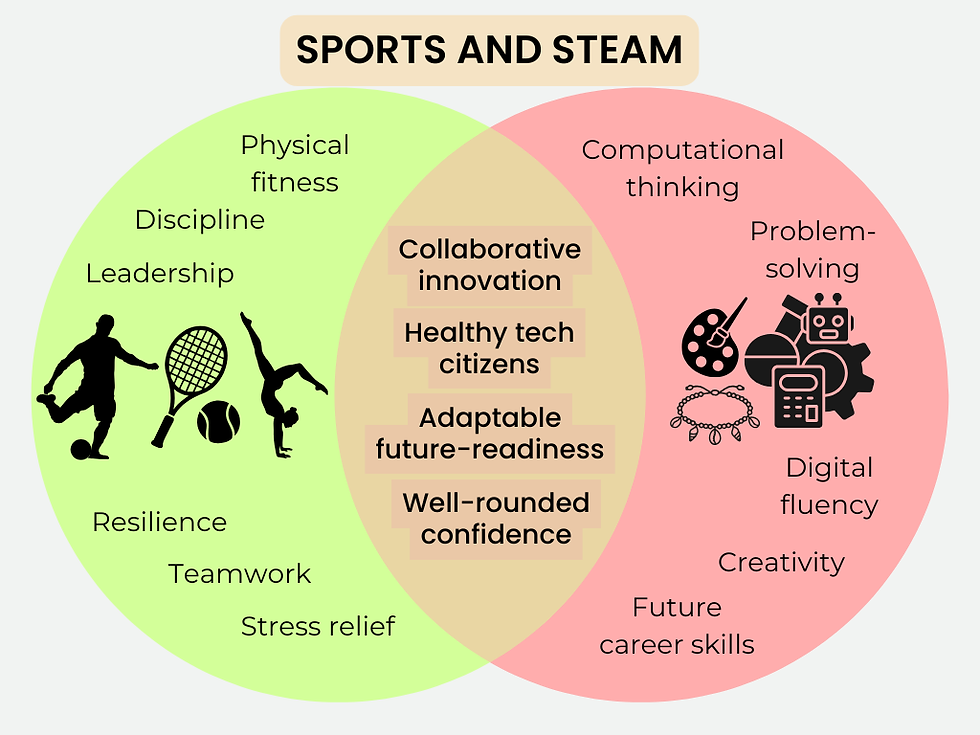
Sports and STEAM Skills: A Powerful Combination
Complementary activities build stronger brains, bodies, and character.
For example, a child who plays soccer and attends a robotics club learns to shift between physical strategy and logical reasoning. A mindset increasingly valuable in modern education and workplaces.
How Physical Activity Enhances Learning
Physical activity does far more than just build muscle; it serves as a critical driver for cognitive development and academic success. Regular exercise has been shown to improve focus and concentration, while participation in team sports strengthens communication skills and movement directly supports better memory retention. Through structured play, children build the resilience needed to tackle challenges, often bringing sharper attention and superior emotional regulation to both academic and creative tasks. This holistic approach ensures that an active child is better equipped to handle the mental demands of learning and problem-solving.
How STEAM Learning Strengthens Real-World Skills
STEAM activities are a powerful vehicle for developing applied intelligence, as they require children to move beyond theory and into practical execution. Through coding, students strengthen their logical sequencing, while robotics builds essential spatial reasoning as they navigate physical and digital environments. Design thinking further improves strategic analysis by teaching kids how to deconstruct complex problems, and project-based learning builds the persistence necessary to see a task through to completion. Ultimately, when children create, test, and improve their own ideas, they develop a profound sense of confidence rooted in action and tangible results, rather than just passive instruction.
Creative Arts as the Third Pillar of Balance
Balanced development stems from a synergy between physical activity, technology, and the creative arts. Activities such as clay modeling, jewelry design, game design, book publishing, robotics, and coding collectively build fine motor coordination, pattern recognition, spatial awareness, and a deep sense of patience and attention to detail. While the mediums differ, their developmental impact is shared: shaping clay strengthens hand-eye coordination, designing jewelry sharpens precision and visual planning, and coding reinforces structured reasoning. By engaging in these diverse creative outlets, children develop a well-rounded skill set that balances technical logic with tactile artistic expression.
Why Variety Prevents Burnout in Children
Children benefit from switching between physical, creative, and cognitive challenges. Variety reduces mental fatigue from repetitive tasks and strengthens executive functions such as, planning, focus, and self-control. It also encourages flexible thinking and prevents early over-specialization. Exposure to diverse activities builds broader neural pathways, allowing children to adapt when one area becomes challenging.
Movement + Making: A Modern Learning Formula
When children master physical discipline, digital creativity, artistic expression, they grow into strategic thinkers, collaborative team players, resilient learners, confident creators.
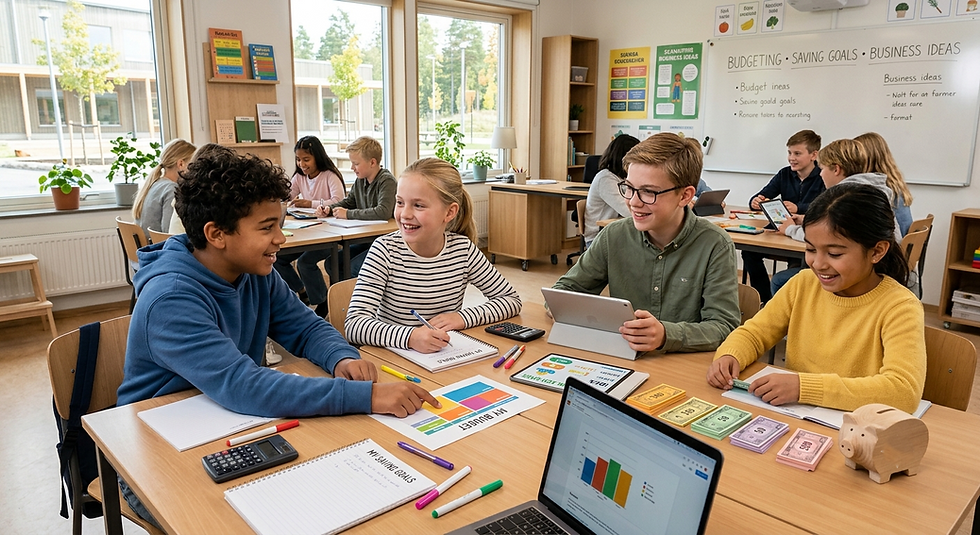
At GowReads, structured programs complement children’s physical activities rather than replace them. Alongside AI literacy, coding, robotics, and finance education, children can also explore book publishing projects, clay modelling, creative jewelry design, and collaborative workshops. These experiences encourage critical thinking, creativity, and tangible skill-building in a supportive environment.
Preparing Children for a Multi-Skilled Future
The future will not belong only to the strongest or only to the most technical. It will belong to those who can think, adapt, collaborate, create, and stay resilient. Balanced activities from sports to STEAM help children develop strength in both physical and intellectual spaces. And this balance is what truly prepares them for life.


Comments