
How Learning Python Improves Math Skills and Logical Thinking in Kids
Quick Answer: Learning Python helps kids improve math skills and logical thinking by turning abstract concepts into interactive experiences. Through coding, children understand variables, patterns, and problem-solving in a practical way, making math more engaging, visual, and easier to apply in real life.
Why Python Is a Powerful Tool for Learning Math
When parents think about coding, they often imagine complex programs and advanced technology. However, at its core, Python is deeply connected to mathematics and logic. For children, learning Python is one of the most effective ways to make math practical and meaningful. Instead of memorizing formulas, kids use Python to build games, solve problems, and experiment with ideas. This shift from passive learning to active creation transforms math from a difficult subject into a tool they can use and control. As a result, children develop stronger computational thinking and a deeper understanding of mathematical concepts.
Making Variables and Algebra Easy to Understand
In traditional math learning, variables like x and y can feel abstract and disconnected. Python changes this completely by giving variables a visible purpose. When a child creates a simple game and stores a score in a variable, they are applying algebra without even realizing it. When they increase or decrease that score, they are performing mathematical operations in real time. This direct interaction helps children understand how variables work, not just how to solve them on paper.
Learning becomes intuitive because they can instantly see the result of their changes. Instead of asking what x equals, they explore how changing x affects an outcome. This builds a much stronger conceptual foundation in algebra.
Learning Geometry Through Coding and Creativity
Python also helps children understand geometry in a visual and engaging way. Using tools like the Turtle library, kids can draw shapes, patterns, and designs by writing simple commands. As they create shapes, they naturally apply geometric concepts such as angles, distance, and direction. Drawing a square requires understanding right angles, while more complex patterns introduce ideas related to symmetry and spatial reasoning.
Since they create something visual, the concepts become easier to grasp. Geometry no longer remains as just numbers and formulas but becomes a creative process where math directly influences what they see on the screen.
Building Logical Thinking Through Algorithms
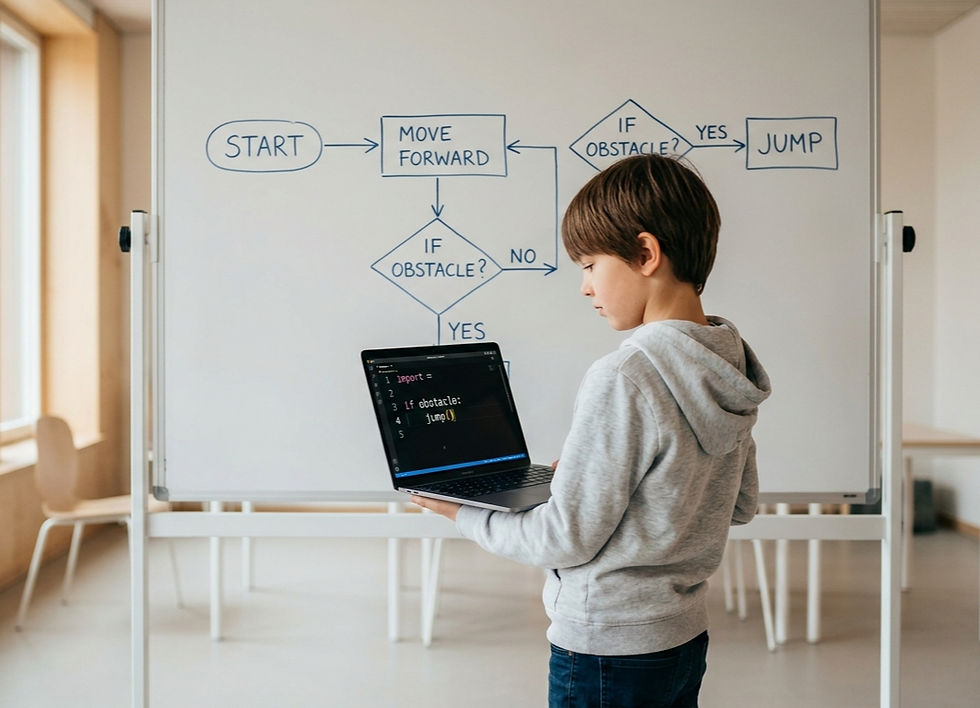
One of the most important skills children develop through Python is logical thinking. Coding requires breaking down a problem into clear, step-by-step instructions. If a child wants to create a character that jumps in a game, they must define how high it jumps, how fast it moves, and when it lands. Each step must follow a logical sequence. If something is out of order, the program does not work. This process teaches children how to think in a structured way. They learn to plan, predict outcomes, and understand cause and effect. These are the same skills required to solve multi-step math problems and complex reasoning tasks.
Turning Mistakes into Problem-Solving Opportunities
One of the biggest advantages of learning Python is how it changes a child’s relationship with mistakes. In traditional math, a wrong answer can feel discouraging. In coding, an error is simply part of the process.
When a program does not work, children are encouraged to analyze what went wrong and try again. This builds resilience and persistence. Instead of focusing on getting the right answer immediately, they focus on finding a solution. Over time, children develop a problem-solving mindset. They become comfortable with challenges and confident in their ability to work through them.
From Math Anxiety to Confidence
For many children, math can feel intimidating. Python helps reduce this anxiety by making learning interactive and rewarding. When kids see their code come to life, whether through a game or a visual pattern, they experience a sense of achievement. This positive reinforcement changes how they view math. It becomes something they can experiment with, rather than something they have to get perfect. As their confidence grows, so does their willingness to take on more complex challenges.
Python provides children with a powerful way to develop these skills in a hands-on, engaging way. By learning Python, kids strengthen their math skills, improve logical thinking, and build resilience. They move from memorizing answers to understanding processes, from passive learners to active problem-solvers.


Comments